
If you’re one of the thousands of people who decide to undergo breast augmentation each year, you’re likely excited to enjoy the results of your procedure: a curvier silhouette, enhanced cleavage, and more confidence (both in and out of your clothing). However, before you get too far shopping for bras and other items you’ve been eyeing to complement your new figure, it’s essential that you focus on recovery. In this blog, we’ll provide a general overview of breast augmentation recovery, so you know what to expect and can be certain you’ll achieve optimal results.
6 Min Read:
Table of Contents
- The First 24 Hours After Breast Augmentation
- Days Two and Three
- Days Four Through Seven
- Week Two
- Weeks Three and Four
- Months Two and Three
- Tips for Optimizing Your Breast Augmentation Recovery
The First 24 Hours After Breast Augmentation
Breast augmentation is an outpatient procedure, so you’ll return home the same day after you’ve spent some time being monitored in recovery. Dr. Paydar will treat you with the ELIXIR MD™ blue light Detox™ protocol prior to surgery to minimize infection and inflammation, and then after the operation with the Cellular Repair™ protocol (yellow LED light) before sending you home to stimulate your body’s recovery abilities. Because anesthesia will leave you groggy and unsteady, you’ll need a responsible adult to drive you home and stay with you for the first night, helping you get settled in and comfortable.
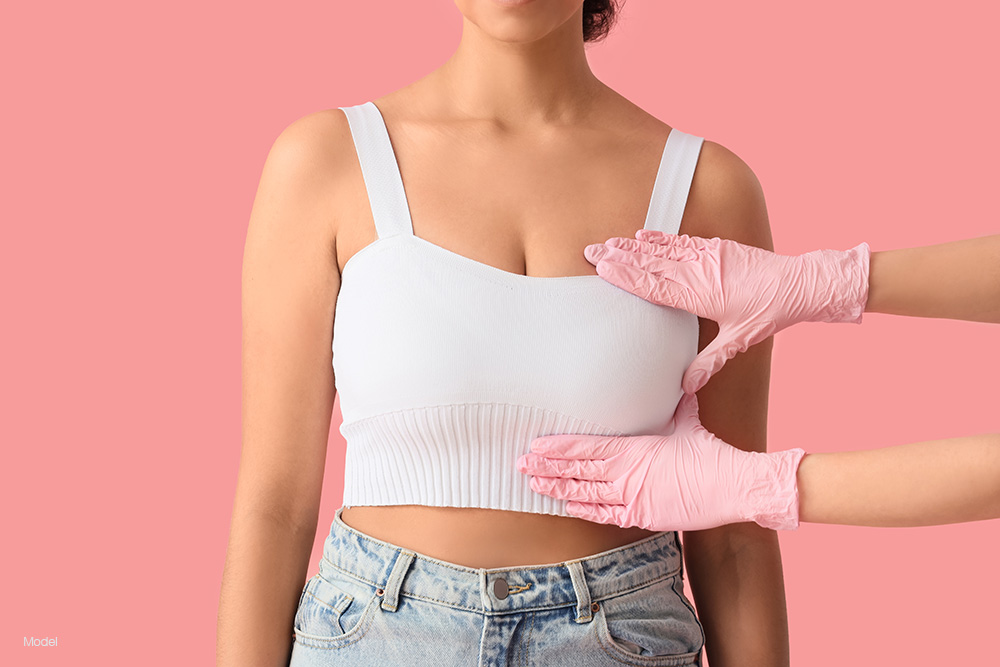
Your incisions will be covered with DERMABOND™ (tissue glue) or surgical tape, and you’ll be placed in a surgical bra or compression garment. Wearing your compression bra as instructed is essential because it helps minimize swelling, supports your healing breasts, and protects your incisions.
The first day after your breast augmentation is dedicated to resting. Before your surgery, it’s helpful to prepare a comfortable recovery area with pillows, blankets, water, and any necessary electronics. Keeping your upper body elevated with pillows can ease pressure and help reduce swelling. Staying hydrated will help flush out residual anesthesia and ease side effects such as dizziness or constipation. You’ll also be instructed to sleep on your back and, in some cases, for more comfort, with your upper body elevated. Having said all of that, many patients feel very good after surgery and are up and about, but do take it easy.
Days Two and Three
As the anesthesia fully wears off, you may notice some tightness, soreness, and a feeling of heaviness across your chest. This is normal, especially as your skin and tissues adjust to the addition of implants. Any discomfort can be alleviated by prescription or over-the-counter pain medications (TYLENOL® or Motrin®); staying elevated and supported will also help.
While it’s still important to rest during these first few days, you should also engage in gentle movement. Taking short walks around your house every couple of hours helps to improve circulation and reduces the risk of developing blood clots. However, you should avoid too much activity, including lifting, bending, or exaggerated arm raises.
Days Four Through Seven
By midweek, discomfort often shifts from sharper feelings of soreness to mild aching and pressure. Swelling and breast firmness persist, but you’ll notice gradual improvement each day.
You will have a follow-up visit with Dr. Paydar during this first week. He will examine your incisions, assess swelling, and ensure the healing process is on track. He will also administer the ELIXIR MD™ Cellular Repair™ treatment (second yellow light) at this time. Continue wearing your surgical bra as instructed and sleeping on your back with your upper body elevated. Dr. Paydar will start you on your implant massage toward the end of the first week to help bring down the high riding implants.
Toward the end of the week, you may start to feel your energy increase. If Dr. Paydar clears you, you may be able to do some light household tasks. Take it slow, though, as overexertion can increase swelling and delay healing. If you have a desk job, you may feel ready to return to work, as long as you refrain from any tasks that are physically demanding.
Week Two
During week two of your breast augmentation recovery, your mobility will begin to improve, and your discomfort will continue to decrease.
Your breasts will still appear higher on your chest than expected and feel firm due to muscle spasms. This is part of the normal healing process. As swelling subsides and your tissues heal, your implants will gradually soften and move into a more natural position.
Continue wearing your supportive garments and avoid strenuous activity, especially movements that engage your chest muscles.
Weeks Three and Four
By the end of the first month after your breast augmentation, most bruising and tenderness will have resolved. Swelling will continue to diminish, and your incisions should be nearly healed. At this stage, Dr. Paydar may recommend scar massage, silicone scar sheets, sunscreen, or other topical treatments to support scar maturation. He will also administer the ELIXIR MD™ NeoxCell™ protocol (combination of red and yellow light), designed to boost collagen production in your skin and encourage healing, resulting in softer scars, improved skin elasticity, and a more even skin tone.
You may slowly resume light cardio exercise, but heavy lifting and upper body workouts should still be avoided unless cleared.
Months Two and Three
During months two and three following your breast augmentation, your recovery will have entered its final phase. Most swelling will have resolved, your implants will have settled, and your breasts will look and feel more natural. Around the two-month mark, you will typically be cleared to return to all activities, including strength training.
While subtle healing will continue for several more months, at this point, you’ll be back to your normal routine and enjoying your final results.
Tips for Optimizing Your Breast Augmentation Recovery
To ensure that your breast augmentation recovery progresses smoothly and without complications, it is essential that you follow Dr. Paydar’s postoperative instructions to the letter. Other ways to maximize healing after breast augmentation include:
- Wearing your surgical bra as directed to support healing and reduce swelling and discomfort
- Prioritizing rest during the first week, but taking short walks daily to encourage circulation
- Staying hydrated and eating protein-rich, nutrient-dense foods
- Sleeping on your back with your upper body elevated
- Avoiding smoking and drinking alcohol, which can slow healing
- Resuming normal activities and exercise gradually, and only after cleared by Dr. Paydar
Discover Breast Augmentation Options in Newport Beach
If you’re ready to boost your curves and your confidence with breast augmentation, it’s time to schedule a consultation with board-certified plastic surgeon and breast enhancement expert Dr. Keyian Z. Paydar. Dr. Paydar’s skill and enhanced recovery protocol using ELIXIR MD™ and peptides help ensure that your breast augmentation results are gorgeous and that healing after surgery progresses smoothly. To make an appointment, call our office today at (949) 755-0575 or complete our online contact form.